
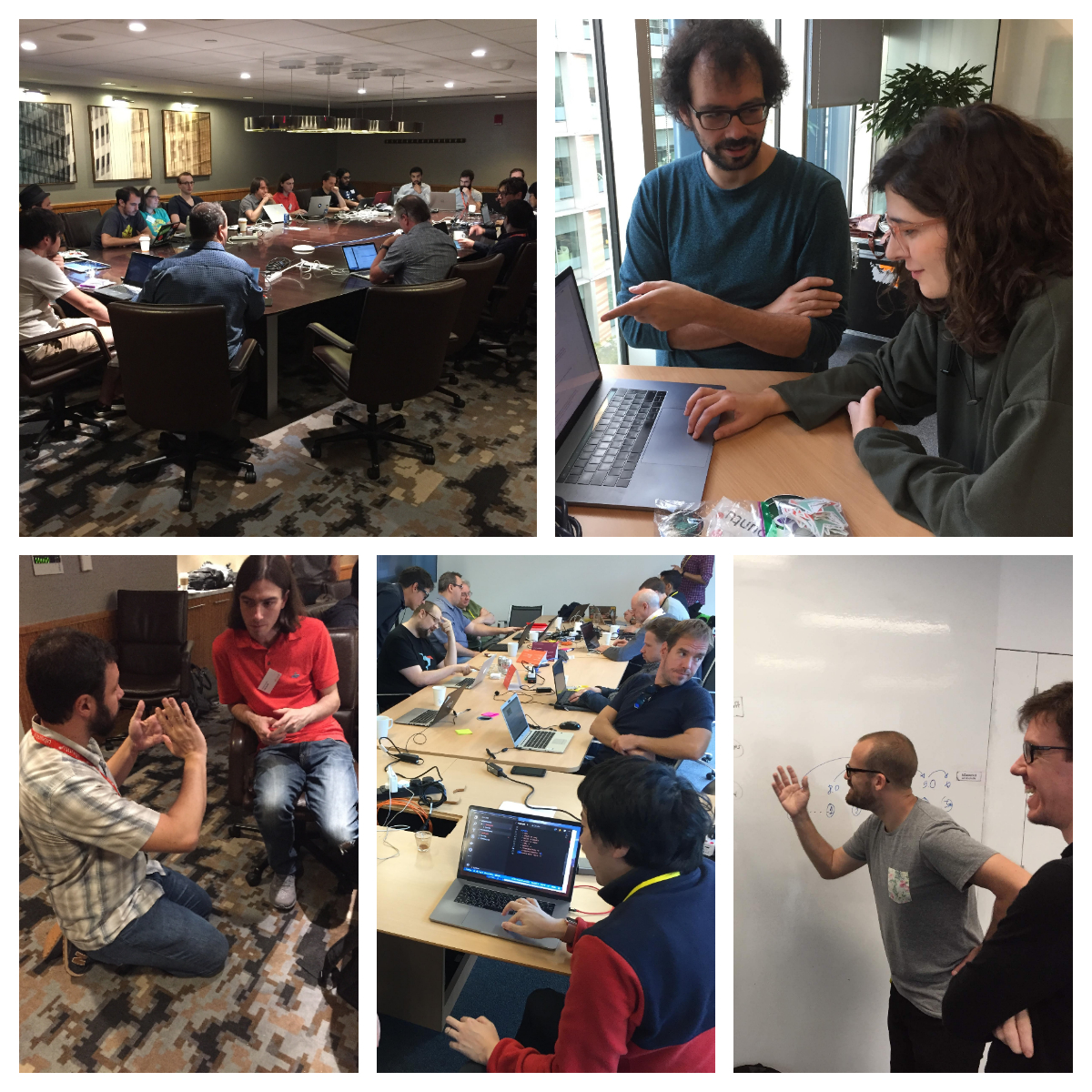
Following previous events in New York, Seattle, and London, the fourth Snapcraft Summit is taking place in Montreal, Canada from June 11th to 13th 2019. We have partnered with Travis CI this time and also expanded the scope of the event to three tracks. Snapcraft Summit Snapcraft is the universal app store for Linux that

Sharing is caring. Alexander the Great File transfer is the bread and butter of information exchange in the digital world. Documents, photos, videos, we share them with our colleagues and friends. The only problem is, the Internet is a global village with many languages – and we’re talking about software, not humans. If you want

This was a fairly busy two weeks for the Web & design team at Canonical. Here are some of the highlights of our completed work. Web team Homepage takeovers This iteration we designed and built four takeovers for our home pages including: The German version of compliance webinar The German version of AI/ML webinar A
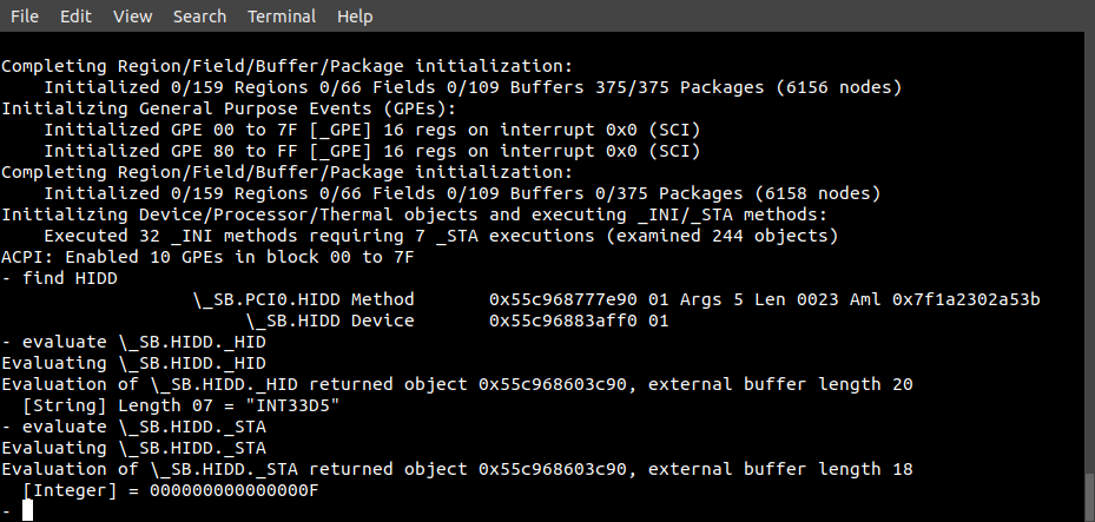
Using acpidbg on Ubuntu 18.04 x64 can be quite handy; however, the Linux kernel with ACPI_DEBUGGER is not always available, such as on Ubuntu for ARM. In such cases, acpica also provides a set of utilities, named acpica-tools, for ACPI debugging. Installation Installing acpica-tools is as easy as the following command: The latest source c

At Canonical, helping customers overcome their challenges is what we do every day. In the IoT world, a common challenge we encounter is customers who are interested in transitioning to Ubuntu Core and the snapcraft.io ecosystem, but are unsure how to begin. This post covers the recommended approach. In most cases, it’s relatively easy for

Overview of the typographic improvements to our CSS framework introduced over the past 12 months.

Ubuntu Core (UC) is Canonical’s take in the IoT space. There are pre-built images for officially supported devices, like Raspberry Pi or Intel NUCs, but for other boards, when there is no community port, one needs to create one on their own. This is the the case if one wants to run Ubuntu Core 18

“All my centurions develop using snaps.” Julius Caesar By and large, software development can be an enjoyable process. Until you hit the first error, that is. At that point, you want to get past the stumbling blocks as quickly as possible and resume building your apps. A robust, flexible development framework can make a big

Newsletter signup

When using the Robot Operating System (ROS), it’s fairly common to want to shut down a launched system if a specific node (or set of nodes) exits. This is pretty easy in ROS1, because launch files support the required attribute on each node. As a result, crafting a two-node system where one of the nodes

A subjective review and some takeaways of our teams trip to FOSDEM 2019.

During February 2019 we celebrated another fine Plasma release with our friends at KDE by showcasing a month of KDE snaps on the Snapcraft Twitter and other social accounts. The KDE developers have done amazing work to create an SDK that simplifies making snaps of KDE applications and they also publish a common KDE framework

Canonical will be attending Nvidia’s GTC Conference in San Jose, California March 18 – 21, 2019.

As 14.04 reaches the end of its five-year, Standard Security Maintenance, LTS window in April 2019, support for the OS is transitioning into a new phase – Extended Security Maintenance (ESM).

Data backups are arguably the most important part of one’s software setup. While many scenarios fall into the realm of if, data loss belongs in the when domain. Over time, every one of us will experience some kind of hardware failure, be it an optical disk, a hard disk or a lost phone. It is

At the end of last year, we shared an infographic highlighting the adoption of snaps by users for their desktop, server or IoT devices. Those snaps wouldn’t be available without the growing number of developers building them behind the scenes. But why have developers, including those from some of the world’s largest software companies, de

Kubernetes, the flexible software that coordinates containers, runs on a range of platforms, from public to private cloud, data centers, bare metal and virtualised infrastructure, and requires a number of considerations for design and performance optimisation. Beyond identifying individual requirements, such as use cases and topology, org
Ubuntu tech blog
Deep dives for developers
Visit the Ubuntu Tech Blog for deep dives into product features, step-by-step tutorials, and the latest updates from Canonical's engineering teams.