
Blog posts tagged "canonical kubernetes"

Achieving vendor neutrality in telco clouds requires an infrastructure layer that respects open standards, without wrapping them in rigid platform layers. By combining upstream alignment with up to 15 years of support longevity, Canonical’s approach to Sylva is built around a requirement that matters deeply to telcos: follow upstream clou

Sylva 1.5 becomes the first release to include Kubernetes 1.32, bringing the latest open source cloud-native capabilities to the European telecommunications industry. With the launch of Sylva 1.5, Canonical Kubernetes is now officially part of the project’s reference architecture. This follows its earlier availability as a technology prev

Today at KubeCon North America, Canonical, the publisher of Ubuntu, released support to enable FIPS mode in its Kubernetes distribution, providing everything needed to create and manage a scalable cluster suitable for high-security and Federal deployments.

The telecommunications industry is undergoing its most significant transformation in decades. The move from vertically integrated, proprietary systems to disaggregated, cloud-native infrastructure has unlocked enormous potential for agility and innovation. Yet, for many operators, the challenge has been how to realize that potential while

Reference architectures speed up time to market for agentic AI projects To ease the path of enterprise AI adoption and accelerate the conversion of AI insights into business value, NVIDIA recently published the NVIDIA Enterprise AI Factory validated design, an ecosystem of solutions that integrates seamlessly with enterprise systems, data

The combined solutions simplify infrastructure operations and accelerate time-to-value for AI, telecom, and enterprise computing workloads. Accelerate deployment and operations of BlueField DPUs with Canonical Kubernetes At GTC Paris today, Canonical announced support for the NVIDIA DOCA Platform Framework (DPF) with Canonical Kubernetes

Artificial Intelligence and Machine Learning (AI/ML) are increasingly driving change in telecommunications. Increased adoption is building organizational confidence in the positive impact that AI can bring, which in turn is leading business leaders to push for AI/ML to expand into new use cases. As such, AI/ML will play a key role in brin

Enterprises across industry verticals are looking for new ways to increase the efficacy of their businesses. One way to do this is building an efficient pipeline of processes, employees, devices, and services that are all tightly integrated to get the best return on investment. However, this requires an efficient telecommunication system

At this year’s Mobile World Congress, we’re excited to showcase the capability of Canonical Kubernetes LTS (long-term support), which brings up to 12 years of support and security maintenance to Kubernetes. Available via Ubuntu Pro, Canonical Kubernetes LTS will prove to be transformational for telco customers who require extremely long

Canonical’s Kubernetes LTS (Long Term Support) will support FedRAMP compliance and receive at least 12 years of committed security maintenance and enterprise support on bare metal, public clouds, OpenStack, Canonical MicroCloud and VMware. February 11, 2025 Today, Canonical announced a 12 year security maintenance and support commitment
Try the new Canonical Kubernetes beta, our new distribution that combines ZeroOps for small clusters and intelligent automation for larger production environments that also want to benefit from the latest community innovations

A new upstream Kubernetes release, 1.29, is generally available, with significant new features and bugfixes. Canonical closely follows upstream development, harmonising our releases to deliver timely and up-to-date enhancements backed by our commitment to security and support – which means that MicroK8s 1.29 is now generally available as
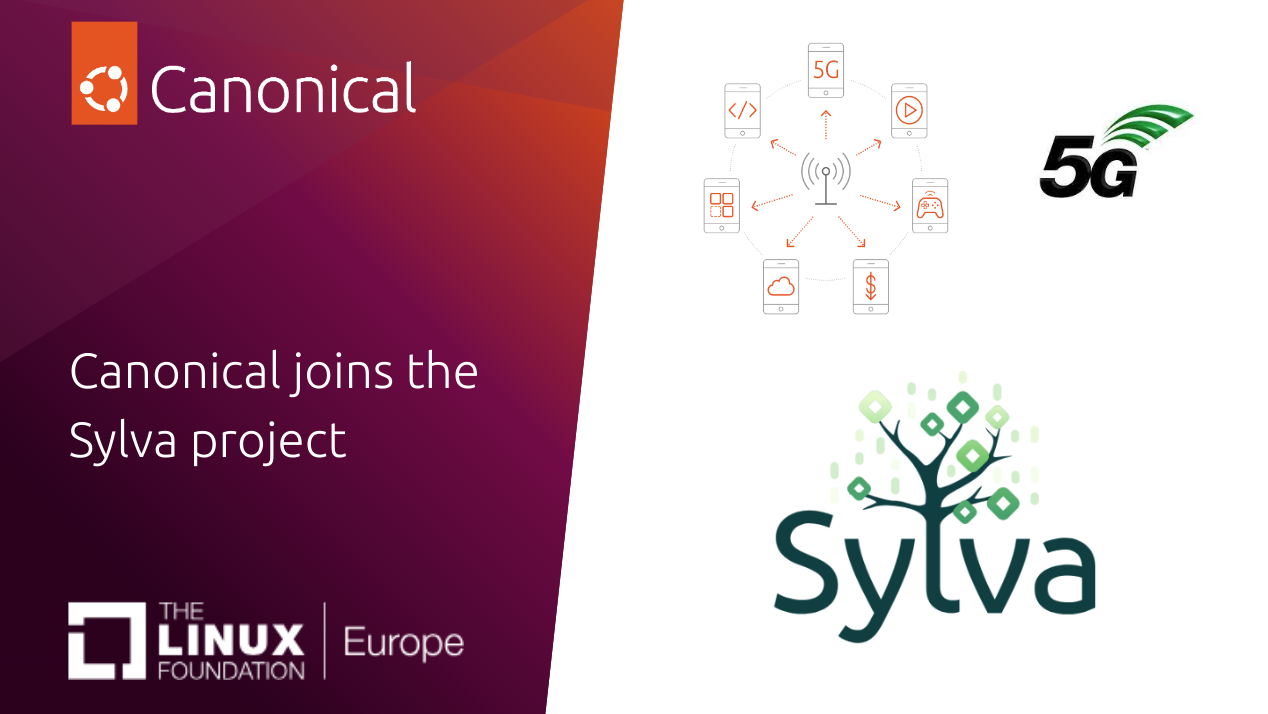
Canonical is proud to announce that we have joined the Sylva project of Linux Foundation Europe as a General Member. We aim to bring our open source infrastructure solutions to Sylva and contribute to the project’s goal of providing a platform to validate cloud-native telco functions. Sylva was created to accelerate the cloudification of

Give Microcks on MicroK8s a try and experience the benefits of accelerated development cycles and robust testing.
Managing a Kubernetes cluster is a complex endeavor. As demands on a cluster grow, increasing the number of deployed pods can help ease the load on the system. But what do you do when you run out of nodes to host those pods, or when the load decreases and some nodes are no longer needed?

We consistently follow the upstream release cadence to provide our users and customers with the latest improvements and fixes, together with security maintenance and enterprise support for Kubernetes on Ubuntu. This blog is a quick overview of the latest development highlights that are made available in Canonical Kubernetes 1.24 as well